
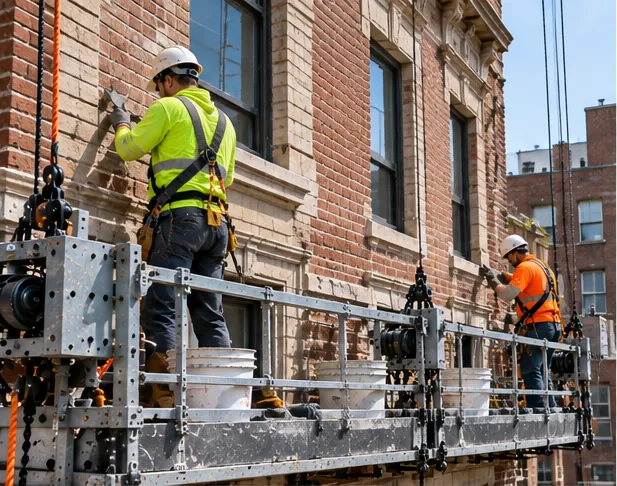
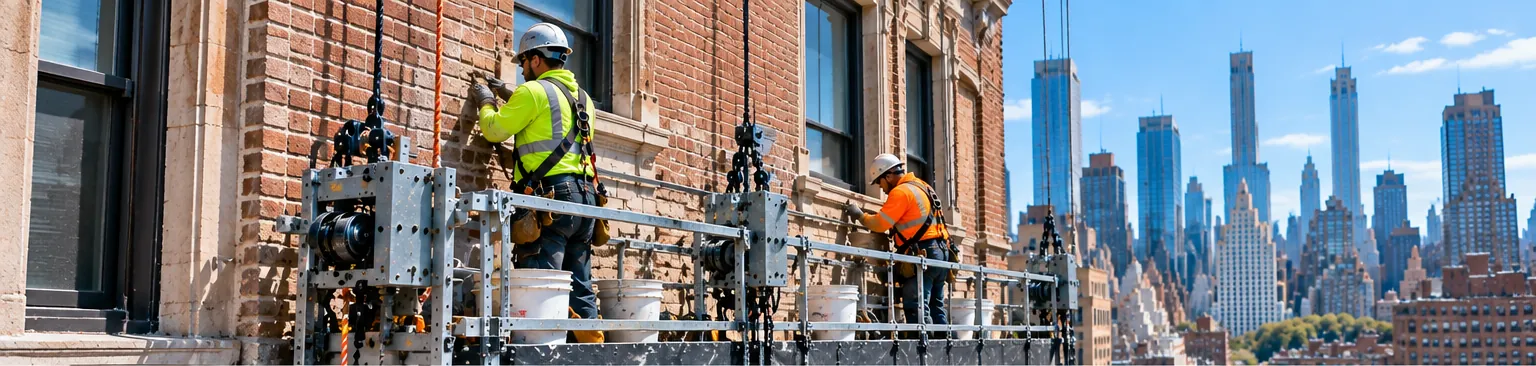
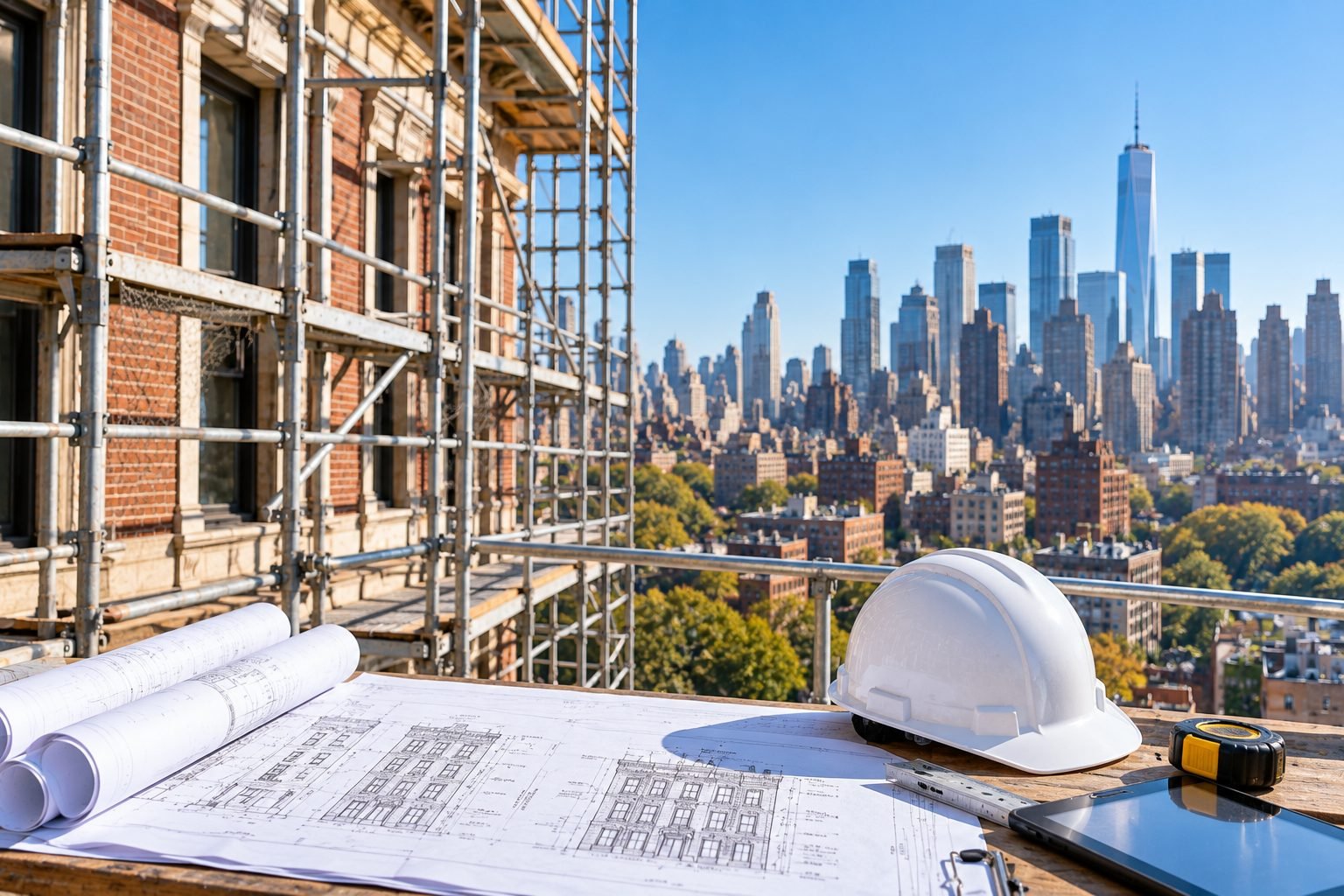
Managing a residential or commercial building in New York City means maintaining more than the building’s interior. Exterior walls, parapets, masonry, and architectural elements require regular attention to protect pedestrians, occupants, and surrounding properties.
For buildings subject to New York City’s Facade Inspection & Safety Program (FISP), commonly called Local Law 11, exterior maintenance also involves recurring inspections, professional reporting, and timely repairs. Understanding the relationship between the building owner, property manager, Qualified Exterior Wall Inspector (QEWI), and facade repair contractor can help prevent delays, unexpected expenses, and prolonged sidewalk shed installations.
What Is Local Law 11 in NYC?
Local Law 11 is the commonly used name for New York City’s facade inspection requirements, now administered through the Facade Inspection & Safety Program. Under FISP, owners of buildings higher than six stories generally must arrange for periodic examinations of their exterior walls and appurtenances and have a technical report filed with the NYC Department of Buildings every five years.
The examination must be performed under the responsibility of a Qualified Exterior Wall Inspector, or QEWI, who is a qualified registered design professional. The inspection evaluates exterior conditions such as deteriorated masonry, damaged parapets, unstable architectural elements, and other conditions that may affect public safety.
Understanding SAFE, SWARMP, and UNSAFE Classifications
SAFE
A SAFE classification means the exterior walls and appurtenances meet the applicable definition of safe and do not require repairs or maintenance to sustain structural integrity during the relevant five-year period. Routine building maintenance remains important even when the report is SAFE.
SWARMP: Safe With a Repair and Maintenance Program
SWARMP indicates that a condition is safe at the time of examination but requires repairs or maintenance within the period identified by the QEWI to prevent it from becoming unsafe. Examples may include deteriorating mortar joints, developing masonry cracks, or other exterior conditions that require planned attention.
Property managers should review the report’s specific locations, recommended repairs, and completion dates rather than assuming all SWARMP conditions can wait until the next inspection. An unresolved SWARMP condition from the previous cycle cannot simply be classified as SWARMP again at the same location in the next cycle.
UNSAFE
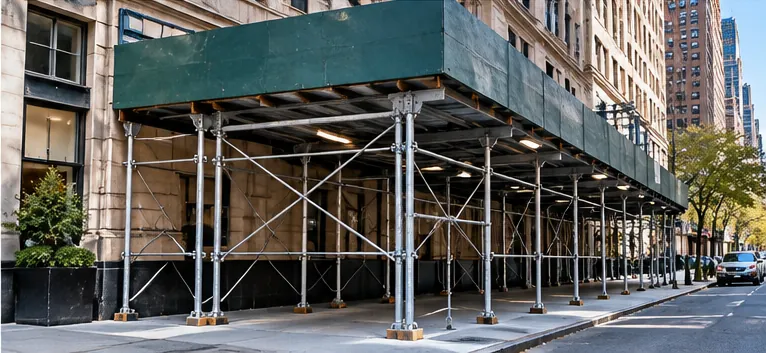
An UNSAFE classification indicates a hazardous exterior condition that requires immediate attention to public protection and corrective action. Depending on the condition and the QEWI’s recommendations, public protection may include a sidewalk shed, fencing, or other protective measures. The owner and QEWI must follow applicable NYC DOB notification, repair, extension, and amended-report procedures. An UNSAFE classification should never be treated as a routine maintenance issue.
FISP Cycle 10: Important Dates for NYC Buildings
FISP Cycle 10 is the current five-year inspection cycle, which began on February 21, 2025. The cycle is divided into three sub-cycles, with designated filing windows based on the final digit of the building’s tax block number.
| Sub-cycle | Block number ending in | Filing window |
|---|---|---|
| 10A | 4, 5, 6, 9 | February 21, 2025 to February 21, 2027 |
| 10B | 0, 7, 8 | February 21, 2026 to February 21, 2028 |
| 10C | 1, 2, 3 | February 21, 2027 to February 21, 2029 |
Property managers should verify their building’s applicable sub-cycle and filing status with their QEWI and the NYC Department of Buildings, since the Department sets the official dates and occasionally adjusts deadlines. Waiting until the filing deadline approaches can make it harder to coordinate inspections, repair designs, contractor availability, access equipment, and tenant notifications.
Common Facade Repairs Identified During FISP Inspections
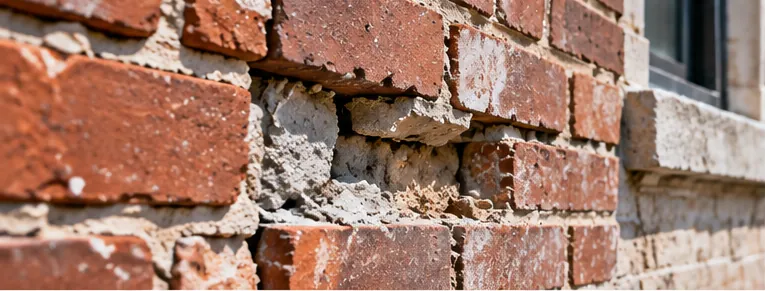
Brick Pointing and Masonry Repairs
Mortar joints can deteriorate from weather exposure, moisture infiltration, and normal aging. Where repointing is appropriate, deteriorated mortar is removed to the specified depth and replaced with a compatible mortar system. Severely damaged or displaced bricks may require replacement or more extensive masonry reconstruction. Pioneer’s brick pointing and masonry repair work addresses these conditions as part of a FISP repair scope.
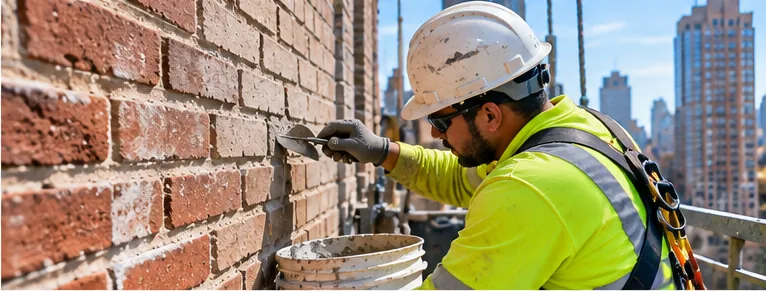
Parapet Wall Repairs and Reconstruction
Parapet walls are particularly exposed to rain, freeze-thaw cycles, and temperature changes. Common problems include cracked masonry, loose coping stones, deteriorated mortar joints, and movement in the wall assembly. Repairs may involve repointing, selective brick replacement, coping repairs, flashing improvements, or partial or full parapet reconstruction in accordance with the approved scope.
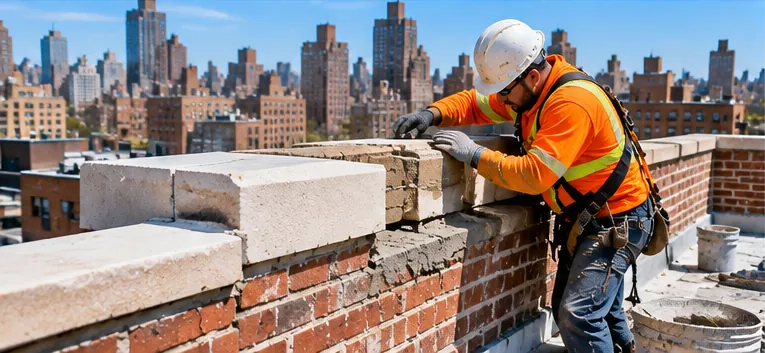
Steel Lintel Repairs and Replacement
Steel lintels support masonry over many window and door openings. Corrosion can cause steel expansion, cracked mortar joints, displaced bricks, and deterioration around the opening. Depending on the condition, the repair may require removal of surrounding masonry, temporary support, steel replacement, flashing, and rebuilding of the affected brickwork.
Facade Waterproofing and Sealant Repairs
Water intrusion can accelerate masonry and steel deterioration. Corrective work may involve joint sealant replacement, flashing repairs, masonry restoration, and other targeted waterproofing measures. The source of the water infiltration should be evaluated before selecting the repair method.
How Property Managers Should Plan a Local Law 11 Repair Project
Step 1: Review the QEWI Report
Identify documented conditions, exact repair locations, photographs, deadlines, and any recommended public protection. Determine whether repair drawings, specifications, permits, or additional professional review are needed.
Step 2: Prepare a Clear Contractor Scope
Provide prospective contractors with the relevant QEWI report, repair details, drawings, and specifications. A defined scope helps contractors price comparable work and reduces uncertainty during bidding.
Step 3: Determine Building Access Requirements
Exterior repairs may require suspended scaffolding, supported scaffolding, sidewalk sheds, or other approved access methods. The appropriate system depends on height, site conditions, repair locations, engineering requirements, and permits.
Step 4: Coordinate Occupied-Building Operations
Address tenant notices, noise, sidewalk access, delivery schedules, entrance protection, and work-area safety. Clear communication can reduce disruptions and preventable scheduling conflicts.
Step 5: Document Repairs and Coordinate Professional Review
Maintain progress photographs, material information, repair records, and relevant inspection documentation. The building’s QEWI or responsible design professional should review completed work as required and handle applicable FISP reports and professional sign-offs.
Why the Lowest Bid Is Not Always the Best Value
Facade restoration bids may vary because contractors make different assumptions about quantities, access, masonry replacement, steel repairs, protection, and site conditions. Property managers should compare more than the total price: scope completeness, repair methods, access, schedule, insurance documentation, and experience with occupied NYC buildings. A proposal excluding necessary work can create change orders and delays.
Local Law 11 Repairs With Pioneer Construction NYC
Pioneer Construction NYC provides facade restoration and exterior repair services for property managers, building owners, co-op and condominium boards, and general contractors throughout New York City. Services include brick pointing, masonry replacement, parapet repairs, steel lintel work, exterior waterproofing, and scaffolding-related construction coordination. For a broader overview, see our facade restoration services and our dedicated Local Law 11 / FISP repairs page.
Pioneer works with the building’s QEWI or engineer to perform repairs in accordance with the applicable project scope. Pioneer is a repair contractor; statutory FISP inspections, professional reporting, and required sign-offs remain the responsibility of authorized design professionals.
Request a Local Law 11 Repair Estimate
If your building has documented facade conditions requiring repairs, Pioneer Construction NYC can review the available project information and discuss the construction scope. Visit our Local Law 11 / FISP Repairs page or call (347) 577-2852. Pioneer serves Manhattan, Brooklyn, Queens, the Bronx, and Staten Island.
This article is provided for general information and is educational in nature. Confirm building-specific obligations and deadlines with your QEWI and current NYC Department of Buildings guidance.