
New York City’s buildings face constant exposure to rain, wind, temperature changes, and everyday environmental conditions. Over time, these factors can affect brickwork, mortar joints, parapet walls, steel lintels, brownstone surfaces, and exterior waterproofing systems.
For property managers and building owners, understanding early signs of facade deterioration is an important part of planning repairs, managing maintenance budgets, and protecting the exterior. Facade restoration is not simply about improving appearance. Properly planned repairs address deteriorated materials, water penetration, and conditions that may affect long-term performance and safety.
What Is Facade Restoration?
Facade restoration involves repairing, preserving, or replacing deteriorated components of a building’s exterior. The scope depends on construction materials, existing conditions, architectural features, and appropriate professional evaluation. Common work includes:
- Brick pointing and masonry repairs
- Brick replacement and selective reconstruction
- Parapet wall repairs and rebuilding
- Steel lintel repair or replacement
- Brownstone and architectural stone restoration
- Exterior joint sealant and waterproofing repairs
- Coping and flashing repairs
- Access systems for elevated exterior work
Some buildings need localized repairs, while others require extensive restoration across multiple elevations.
1. Deteriorated Brick Mortar Joints
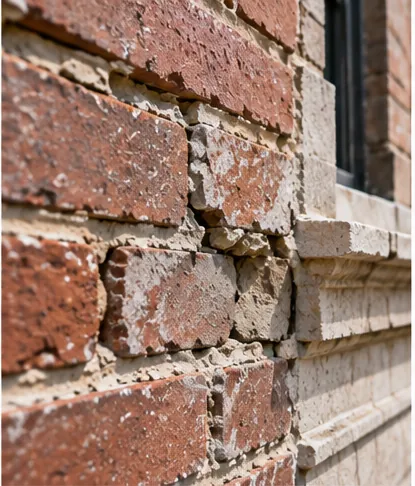
Mortar joints help bind masonry units and form part of the exterior wall’s weather-resistant assembly. Over time, mortar can crack, erode, separate, or lose adhesion because of moisture, freeze-thaw cycles, material incompatibility, and movement.
Warning signs: open joints, missing mortar, visible gaps, loose masonry, and recurring moisture infiltration near exterior walls may indicate deterioration.
Typical repair method, brick repointing: where appropriate, deteriorated mortar is carefully removed to the specified depth without unnecessarily damaging surrounding brickwork. Joints are cleaned and prepared before compatible mortar is installed and finished. Excessively hard or incompatible mortar may contribute to deterioration of older brickwork, so material selection should suit the existing masonry. Learn more about our brick pointing and masonry contracting services.
2. Cracked, Spalled, or Displaced Bricks
Bricks can deteriorate when moisture enters the masonry and undergoes repeated freezing and thawing. Corrosion of embedded steel, structural movement, and incompatible prior repairs may also contribute. Spalling occurs when the brick surface breaks away, exposing underlying material.
Depending on severity, work may involve selective brick replacement, localized masonry rebuilding, joint repairs, or investigation of the underlying cause. Simply coating severely deteriorated masonry does not necessarily correct the condition. Repair both damaged materials and contributing factors.
3. Parapet Wall Deterioration
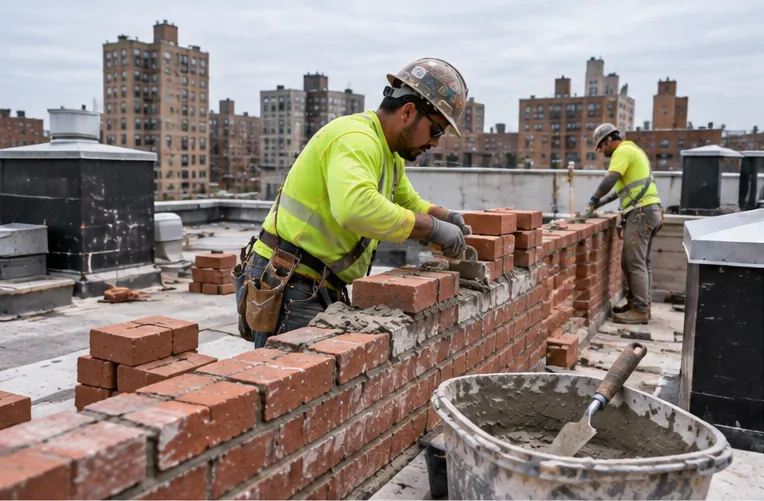
Parapet walls extend above the roofline and are exposed to weather from multiple directions. They can develop deteriorated mortar, cracked masonry, displaced coping, water penetration, and movement. Because they are elevated exterior elements, deterioration may create significant safety concerns. Parapet repair and reconstruction may include:
- Removing loose or deteriorated masonry
- Repointing mortar joints and replacing damaged bricks
- Rebuilding unstable wall sections as specified
- Repairing or replacing coping
- Installing or improving flashing and waterproofing details
Extensive reconstruction may require engineered details, temporary support, permits, and appropriate access. The objective is to restore the wall assembly according to approved requirements, not merely cover visible cracks. See our parapet wall repair services for more detail.
4. Rusted Steel Lintels Above Windows and Doors
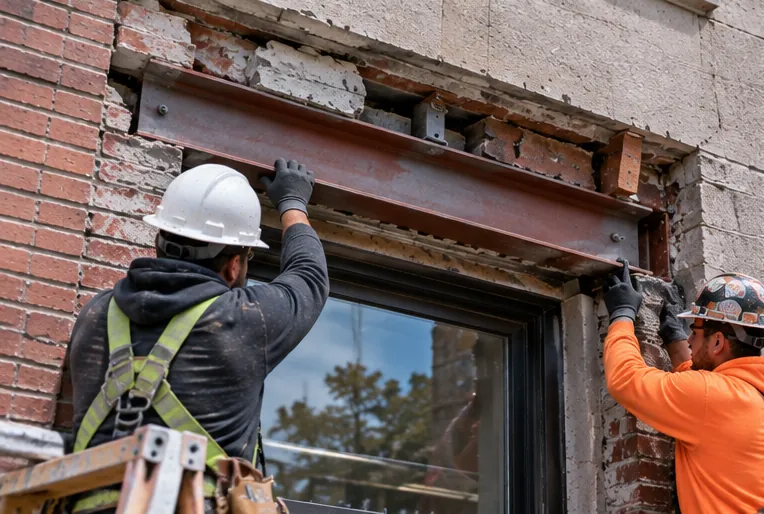
Steel lintels support masonry above many window and door openings. When water reaches the steel, corrosion can develop. Expansion of rust products may exert pressure on surrounding masonry.
Warning signs of lintel deterioration: stepped cracks near window corners, displaced bricks, rust staining, bulging masonry, and deteriorated mortar above openings should be evaluated to determine whether steel or masonry requires repair.
Replacement may involve removing affected brickwork, installing temporary support where required, removing deteriorated steel, installing a new lintel according to approved details, restoring flashing, and rebuilding surrounding masonry. The extent depends on condition and design requirements.
5. Brownstone and Architectural Stone Deterioration
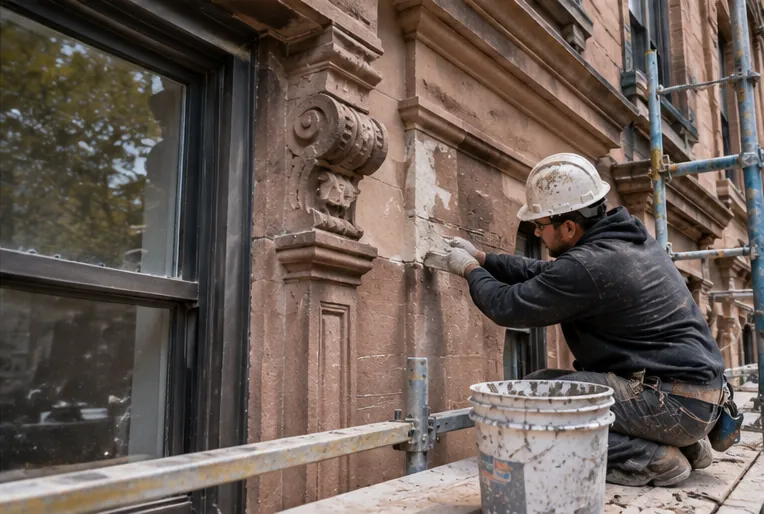
Many NYC townhouses and historic buildings feature brownstone, limestone, or other architectural stone. These surfaces may develop cracking, delamination, erosion, spalling, and deterioration of prior patching. Restoration requires attention to substrate condition and material compatibility.
Work may involve removing unsound material, preparing the substrate, applying compatible repair mortar in appropriate layers, restoring profiles, or replacing severely deteriorated stone. The method should be based on original material, depth of deterioration, and specifications. Designated landmarks or properties in historic districts may require NYC Landmarks Preservation Commission approval. See our brownstone restoration services.
6. Exterior Water Infiltration and Waterproofing Problems
Potential water entry points include open mortar joints, failed sealants, deteriorated flashing, cracks, coping joints, and penetrations. Where water appears inside is not always where it enters the exterior assembly.
Effective repair begins with evaluating likely moisture pathways. Work may include replacing failed sealants, restoring mortar, repairing flashing, correcting coping details, or reconstructing masonry. Applying a coating without understanding the wall assembly can be ineffective and may interfere with moisture movement. Select waterproofing systems suited to the substrate and project requirements.
7. Choosing the Right Access System
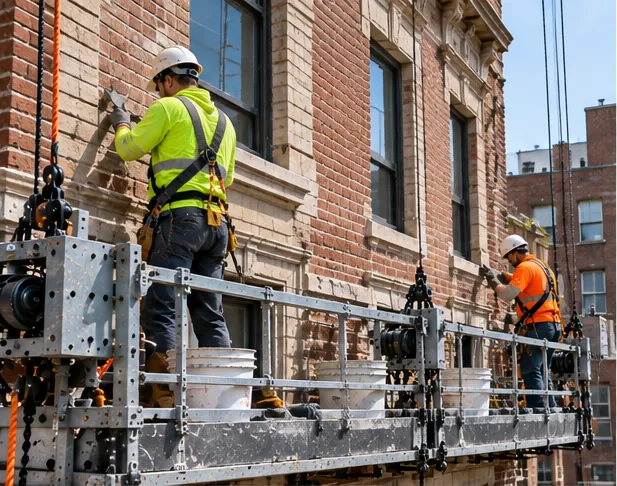
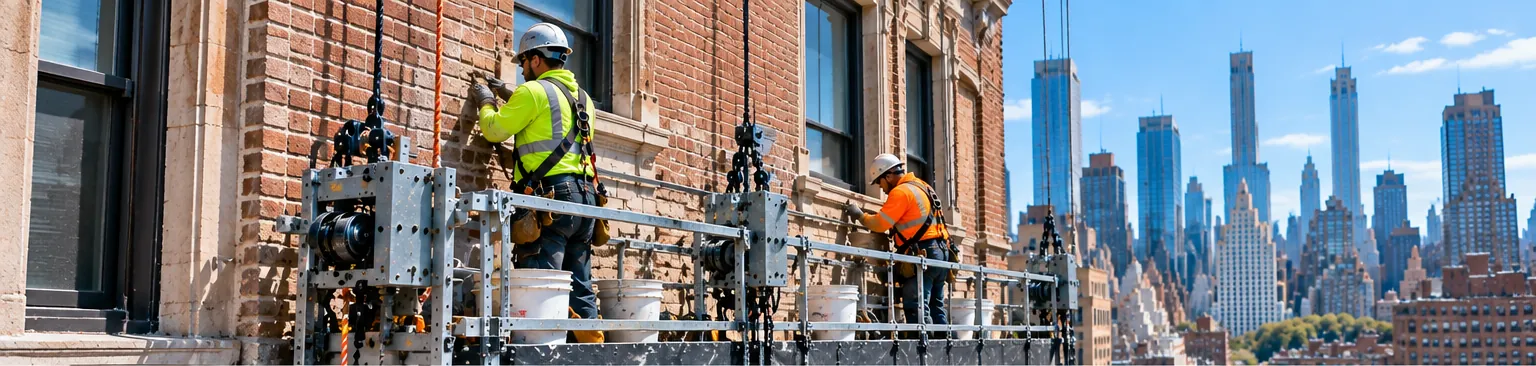
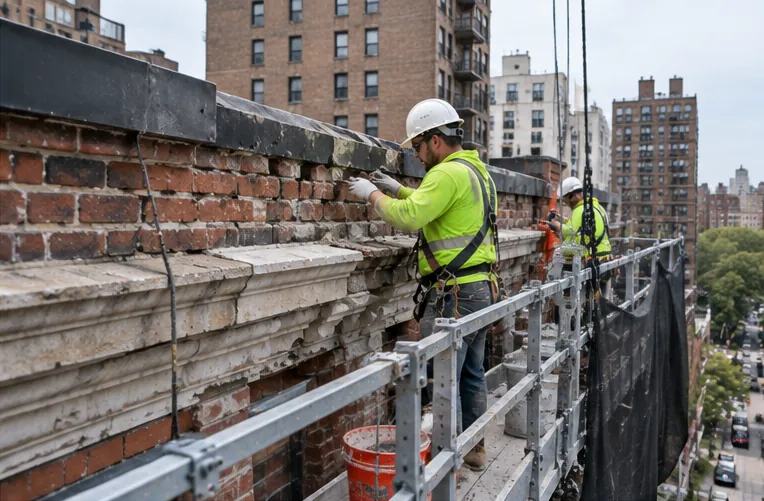
Facade restoration frequently requires work at elevations beyond ground-level reach. Access methods include supported scaffolding, suspended scaffolding, sidewalk sheds, and other approved equipment. Selection depends on building height, roof and ground conditions, work locations, public protection, and engineering. Good access planning improves sequencing and reduces unnecessary disruptions.
8. What Affects Facade Restoration Costs in NYC?
- Repair quantities: area of pointing, bricks to replace, parapet length, and number of steel lintels.
- Building height and access: scaffolding or other access requirements can significantly affect costs.
- Existing conditions: concealed deterioration may become apparent after materials are opened.
- Repair specifications: engineer-designed details, material requirements, and preservation needs affect labor and materials.
- Site logistics: sidewalk access, occupied apartments, material handling, work hours, and protection affect schedules.
- Permits and professional coordination: certain projects require permits, engineering, inspections, and regulatory coordination.
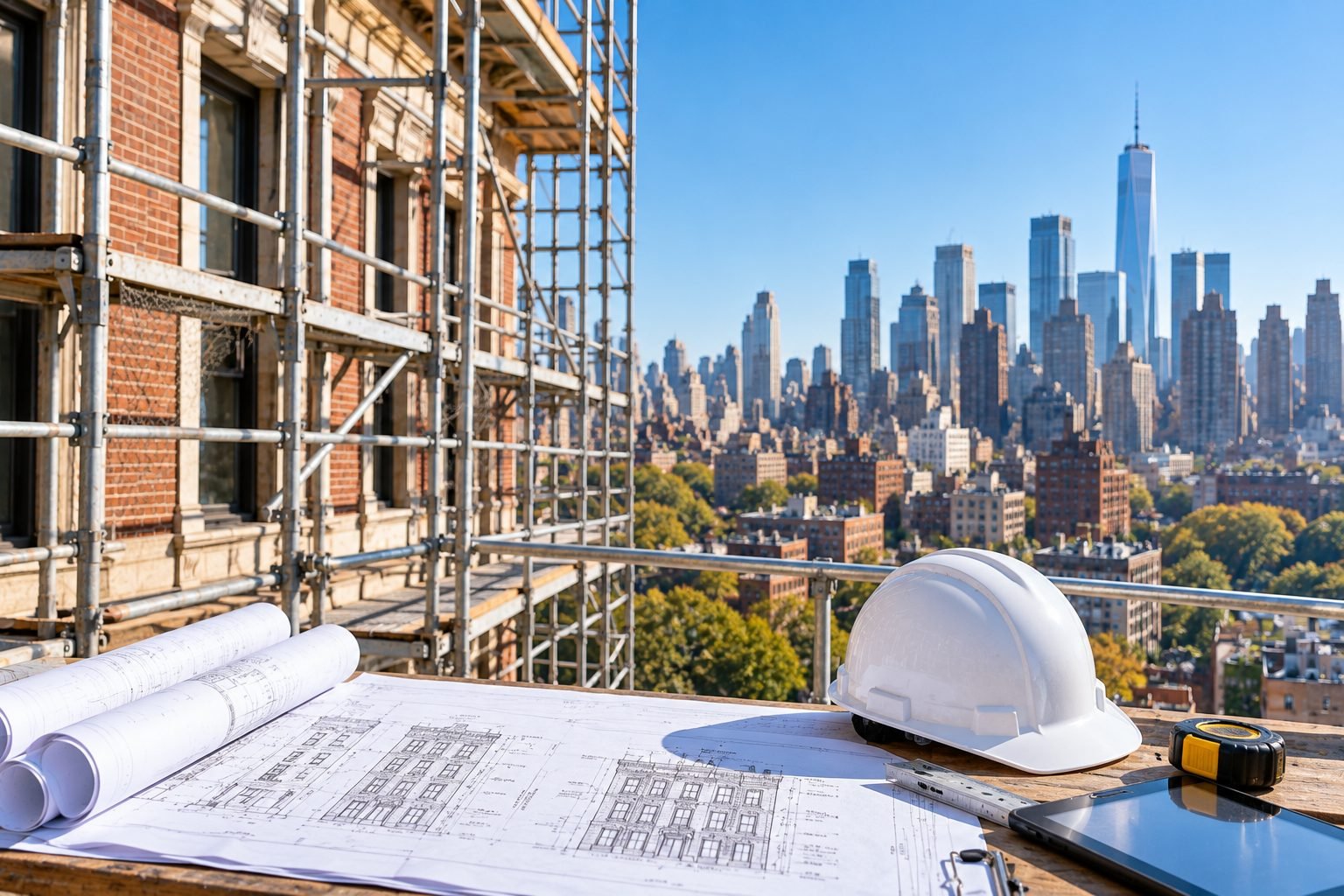
For a meaningful estimate, provide available drawings, photographs, reports, and repair specifications.
9. How to Plan a Successful Facade Restoration Project
Before requesting bids, identify known conditions and gather documentation. A clear repair scope makes proposals easier to compare. During construction, coordination among the owner, property manager, contractor, and project engineer is important. Progress photographs, material records, and repair documentation support future maintenance planning. For FISP buildings, the contractor should coordinate with the QEWI or responsible engineer as required. See our Local Law 11 / FISP repairs page, and our Local Law 11 NYC FISP repairs guide, for how compliance-driven facade work is planned.
10. Facade Restoration Services From Pioneer Construction NYC
Pioneer Construction NYC provides exterior building repair and restoration throughout Manhattan, Brooklyn, Queens, the Bronx, and Staten Island. Services include brick pointing, masonry restoration, parapet wall reconstruction, steel lintel work, brownstone restoration, and exterior waterproofing repairs.
Pioneer works with property managers, building owners, co-op and condominium boards, engineers, and general contractors on residential and commercial projects. Whether the property needs localized masonry repairs or a larger restoration scope, Pioneer can review available information and discuss construction requirements.
Request a Facade Restoration Estimate
Planning facade repairs for a New York City building? Contact Pioneer Construction NYC to discuss your project and request an estimate. Visit our Facade Restoration NYC page, or call (347) 577-2852.
Repair methods vary by building and should reflect site conditions, approved specifications, permits, and professional evaluation where required. This article is educational and is not engineering or legal advice.